

You finally have your baby. This is what you've been waiting for. So why does it feel like you can't relax?
Instead of soaking up the newborn cuddles and enjoying this new chapter, you find yourself constantly checking the monitor, worrying about feeding schedules, researching every little thing, and anticipating what could go wrong next.
Even when someone offers to hold the baby so you can take a break, you can't quite settle. Your mind is still running through the mental checklist of everything that needs to get done.
And when you finally have a moment to yourself, you feel guilty for not spending it with your baby.
If this sounds familiar, you're not alone. Becoming a mother brings an entirely new level of responsibility, and for some women, especially those who are used to being capable, organized, and in control, learning to slow down can feel surprisingly difficult.
But there's a difference between adjusting to motherhood and feeling like your mind never gets a break.
Let's talk about why relaxing can feel so difficult as a new mom and when it may be time to seek support.
Why is it so hard to relax as a new mom?
Motherhood changes more than your daily routine. It changes how you experience responsibility, time, relationships, and even your own identity.
Suddenly, there is another person depending on you for practically everything. You're learning your baby's cues, figuring out feeding and sleep, adjusting to a new schedule, and trying to anticipate needs that you may not even understand yet.
It's a lot.
For women who are naturally high-achieving, independent, or used to being the person who holds everything together, this transition can be particularly challenging.
You may be used to solving problems, staying productive, and feeling confident because you know what you're doing. But with a new baby, there is so much uncertainty.
You can't control when your baby sleeps, whether they'll take a bottle, or how they'll respond to a new environment.
And that lack of control can feel uncomfortable.
You might find yourself:
Constantly researching what's normal and what's not.
Feeling like you need to be the one responsible for everything.
Struggling to let your partner or someone else care for the baby.
Feeling guilty when you take time away from your baby.
Having trouble sleeping even when someone else is watching the baby.
Mentally planning the next five things that need to happen instead of enjoying the moment you're in.
Sometimes, what looks like being an attentive, responsible mom on the outside is actually anxiety keeping you in a constant state of alertness.
Is this normal new mom anxiety or postpartum anxiety?
Some anxiety after having a baby is understandable. You're responsible for a tiny human, you're recovering physically and emotionally, and you're navigating a completely different life than the one you had before.
It's normal to worry about your baby's well-being, want reassurance, and feel more alert than you did before becoming a mother.
However, postpartum anxiety can look different.
Rather than occasional worries that come and go, anxiety may start to take over your thoughts, your decisions, and your ability to enjoy everyday life.
You might notice that:
Your mind constantly jumps to worst-case scenarios.
You feel an overwhelming need to check on your baby.
You struggle to trust other people to care for your child.
You feel restless or on edge even when everything is okay.
You have difficulty sleeping because your mind won't shut off.
You feel like something bad is going to happen, even when there isn't an obvious reason.
You spend more time worrying about being a good mom than actually enjoying being one.
Some mothers also experience unwanted, frightening intrusive thoughts. Having an unwanted thought does not mean you want it to happen or that you will act on it. However, these experiences deserve compassionate, professional support rather than shame or silence.
Postpartum anxiety doesn't always look like panic attacks or visibly struggling. Sometimes it looks like being the mom who has everything figured out, but internally feels like she can never let her guard down.
If anxiety is interfering with your ability to function, rest, or enjoy your life, it's worth talking with a mental health professional.
Why high-achieving moms may struggle to slow down
If you've spent most of your life being the responsible one, the dependable one, or the person who gets things done, motherhood can bring up some unexpected challenges.
You may have built your identity around being capable and independent. You're used to figuring things out, anticipating problems, and making sure everyone is taken care of.
But motherhood introduces a situation where you cannot possibly anticipate or control everything.
And instead of allowing yourself to adjust, you may respond by doing more.
More research. More checking. More planning. More responsibility.
You might even find yourself struggling to delegate because it's easier to just do things yourself.
The problem is that the more responsibility you take on, the more your brain learns that everything depends on you.
And eventually, even when you have the opportunity to rest, your mind doesn't know how.
This is especially difficult when you're also trying to maintain your career, relationships, household responsibilities, and the parts of yourself that existed before motherhood.
You don't just want to be a good mom. You want to be a good partner, a good employee, and still feel like yourself.
That's a lot of pressure to carry.
How can therapy for new moms in Massachusetts help?
Learning to relax doesn't mean becoming less attentive, less ambitious, or less invested in your children.
It means learning that you don't have to operate in overdrive to be a good mother.
Working with a therapist who understands postpartum anxiety and the challenges of modern motherhood can help you recognize the patterns that are keeping you stuck.
In therapy, we can work on:
Understanding your anxiety triggers. Recognize what sends you into overthinking, worst-case scenarios, or the need to stay in control.
Learning to tolerate uncertainty. You don't need to have every answer or anticipate every possible problem to be a capable mom.
Letting go of overfunctioning. Learn to share responsibilities, trust your support system, and recognize when you're taking on more than you need to.
Rebuilding your identity. Motherhood is a huge part of your life, but it doesn't have to become your entire identity. You can still have interests, goals, relationships, and time that belong to you.
Creating space for rest without guilt. Learn to recognize that taking care of yourself isn't taking something away from your children.
Therapy isn't about telling you to lower your expectations or stop caring so much. It's about helping you feel more confident, connected, and in control of your own life.
If you're looking for a therapist for new moms in Massachusetts, online therapy can provide a space to work through these challenges without adding another appointment or commute to your already full schedule.
You can love being a mom and still need support
One of the hardest parts of postpartum anxiety is feeling like you should be happier and enjoying it more, but that’s hard when you’re always worried about something happening.
You wanted this baby. You love your child. You know how fortunate you are to have this experience.
But you can love your baby and still feel overwhelmed. You can be grateful and still struggle. You can be a wonderful mother and still need someone to take care of you, too.
You don't have to wait until you're completely burned out to ask for help.
If you're constantly anticipating the next thing, struggling to rest, or feeling like you can't turn your brain off, you deserve support.
And if you're experiencing severe symptoms, thoughts of harming yourself or your baby, or feel unable to keep yourself or your baby safe, seek immediate professional help. Call or text 988, or go to the nearest emergency department if there is immediate danger.
Ready to feel more like yourself again?
If you're ready to find support from a therapist who makes therapy fit into YOUR life, let's talk.
I'm Alexandra Nataloni, LMHC, and I provide online therapy throughout Massachusetts, supporting women navigating anxiety, postpartum transitions, identity changes, and the challenges of modern motherhood.
You don't have to keep holding everything together on your own.
Schedule your free 20-minute consultation
You deserve to enjoy motherhood, too.
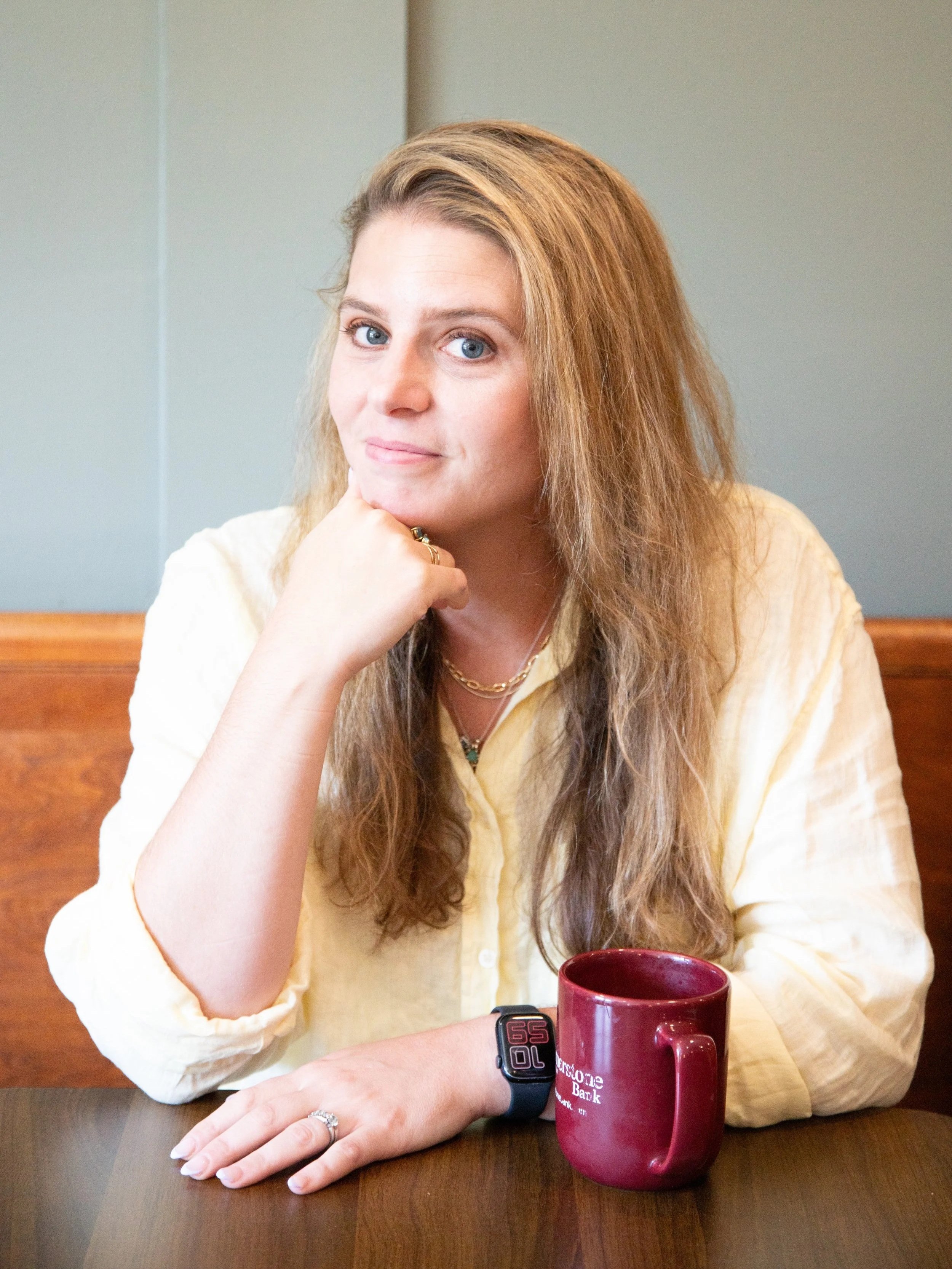
Ali Nataloni, LMHC, is a therapist who specializes in women’s and maternal mental health. With her virtual practice based in East Longmeadow, Ali provides therapy throughout the state of Massachusetts. Through the use evidenced based approaches of Cognitive Behavioral Therapy, Person-Centered Therapy and Acceptance and Commitment Therapy, Ali works with high-achieving mothers navigating the nuances of motherhood. Ali (LMHC#10797) has been practicing for over a decade following her degree from Springfield College. Reach out to Ali via the contact page to work with her.