
Saying “No” Without Guilt in Motherhood: How to Stop Abandoning Yourself and Reclaim Your Autonomy

If saying “no” in motherhood immediately makes you feel guilty, uncomfortable, or like you’re letting someone down, you’re not alone.
For many high-achieving mothers, setting boundaries can feel surprisingly difficult. You may be capable of managing a career, children, a household, relationships, and everyone else’s needs, but asking for what you need or saying no can bring up a completely different kind of anxiety.
Maybe you say yes when you desperately want to say no. Maybe you agree to one more obligation because you don’t want anyone to be disappointed. Or maybe you keep doing things yourself because explaining how you need something done feels harder than just doing it.
Over time, this can leave you feeling resentful, angry, exhausted, and disconnected from yourself.
Learning to set boundaries in motherhood isn't about becoming selfish or caring less. It’s about learning that your needs are allowed to exist alongside everyone else’s.
Why Is It So Hard to Set Boundaries in Motherhood?
Motherhood can make people-pleasing especially complicated.
There are constant expectations about what a “good mom” should do. You may feel responsible for your child’s emotions, your partner’s needs, your family’s expectations, your work responsibilities, and the countless details that keep your household functioning.
If you’re already someone who takes pride in being reliable, capable, and dependable, it can feel almost impossible to step back.
You may have learned somewhere along the way that being needed means being valuable.
So when someone asks you to do something, your automatic response is yes, even when your body, schedule, or emotional capacity is screaming no.
The problem isn't that you care too much.
The problem is that you may have learned to care for everyone else at the expense of yourself.
What Happens When You Keep Saying Yes?
The short-term benefit of saying yes is often relief.
You avoid disappointing someone. You avoid conflict. You don't have to sit with the discomfort of someone being upset with you. But the long-term cost can be significant: the expense of your well-being.
You become overwhelmed.
You feel resentful.
You start thinking, “Why does everyone always need something from me?”
You may feel like your partner doesn't do enough, your family expects too much, or everyone assumes you will handle everything.
And sometimes, you aren't even sure what you want anymore because you've spent so much time responding to what everyone else needs.
This can cause boundaries and the mental load intersect.
When you're constantly anticipating everyone else's needs, you don't just lose time. You can slowly lose your sense of autonomy.
How Can You Set Boundaries in Motherhood Without Feeling Guilty?
The uncomfortable truth is that setting boundaries doesn't always feel good at first. You can set a healthy boundary and still feel guilty. You can say no and still worry that someone is disappointed. You can choose yourself and still wonder whether you're being selfish.
The goal isn't to eliminate guilt before you set the boundary. The goal is to stop allowing guilt to make the decision for you.
Try asking yourself:
“If I weren't worried about disappointing anyone, what would I actually want?”
That question can be incredibly revealing.
Maybe you don't want to attend the family gathering.
Maybe you need your partner to take over bedtime.
Maybe you don't want to volunteer for another school activity.
Maybe you need an hour alone without being responsible for anyone.
Maybe you simply don't have the capacity to help.
Your answer doesn't have to be justified by exhaustion.
Setting Boundaries Doesn't Mean You Love Your Family Less
This is one of the biggest mindset shifts many mothers need to make as it has been engrained in motherhood for a very long time.
A boundary isn't a rejection of another person and two things can exist at the same time.
You can love your child deeply and still need space.
You can love your partner and still expect them to carry more of the household responsibility.
You can care about your parents and still say no to their requests.
You can be a supportive friend without always being available.
And you can be an ambitious woman and a devoted mother without completely abandoning the parts of yourself that existed before motherhood.
Healthy boundaries actually create more room for genuine connection because you're no longer giving from a place of resentment and depletion.
What Can You Say Instead of Automatically Saying Yes?
If you're used to people-pleasing, you don't have to go from “yes, absolutely!” to a dramatic, firm no overnight.
Start by creating space between the request and your response. Instead of immediately answering, try:
“Let me check my schedule and get back to you.”
“I need to think and I will get back to you!”
“I'm not able to commit to that right now.”
“That doesn't work for us.”
“I can't take that on, but I hope you find someone who can.”
You don't need a five-minute explanation. In fact, over-explaining can sometimes be another form of people-pleasing, an attempt to convince someone that your boundary is reasonable enough for them to accept.
Your boundary doesn't require unanimous approval.
How to Reclaim Your Autonomy as a Mother
Learning to set boundaries in motherhood is ultimately about more than saying no. It's about remembering that you are still a person outside of your roles. You are a mother, but you are also a woman with preferences, interests, goals, opinions, limits, and needs. You don't have to earn rest by reaching complete exhaustion. You don't have to earn help by proving you can't do everything yourself. You don't have to wait until you're angry enough to finally ask for what you need.And you don't have to become less ambitious, less caring, or less capable.
You simply need to stop measuring your worth by how much you can carry.
If you're ready to work on boundaries, people-pleasing, anxiety, or the feeling that you have to hold everything together, learn more about boundaries and people-pleasing therapy in Massachusetts.
You deserve relationships where you can be honest about what you need, not relationships where you have to disappear to keep everyone else comfortable.
Online Therapy for Boundaries and People Pleasing in Massachusetts
If you're a high-achieving mother in Massachusetts who feels responsible for everyone and struggles to prioritize yourself, therapy can help you understand why saying no feels so difficult, and practice responding differently.
You don't have to wait until you're completely burned out to make a change.
Through online therapy in Massachusetts, we can work on creating boundaries that feel authentic to you, reducing people-pleasing, managing anxiety, and rebuilding your sense of confidence and autonomy.
Reach out here if you're ready to take that first step.
Ready to Find Your Voice?
If you're ready to stop abandoning yourself to keep everyone else happy, you don't have to figure it out alone.
Schedule a free consultation to talk about what you're experiencing and see if therapy is the right fit for you.
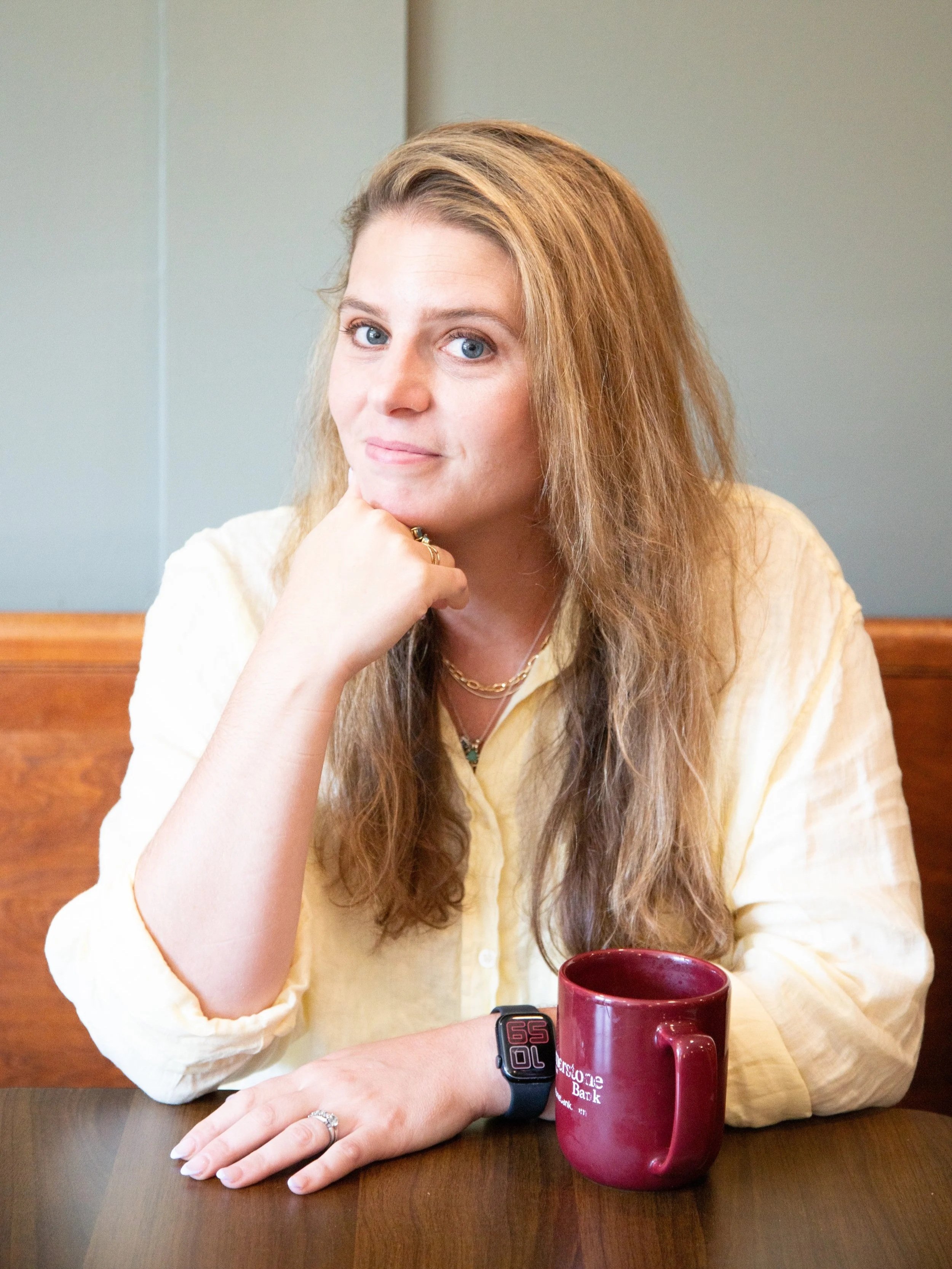
Ali Nataloni, LMHC, is a therapist who specializes in women’s and maternal mental health. With her virtual practice based in East Longmeadow, Ali provides therapy throughout the state of Massachusetts. Through the use evidenced based approaches of Cognitive Behavioral Therapy, Person-Centered Therapy and Acceptance and Commitment Therapy, Ali works with high-achieving mothers navigating the nuances of motherhood. Ali (LMHC#10797) has been practicing for over a decade following her degree from Springfield College. Reach out to Ali via the contact page to work with her.